Keynotes


Keynote Speakers
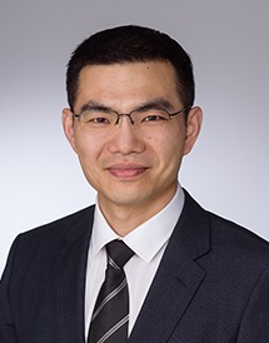
Rui Zhang
Huazhong University of Science and Technology
Title: Multimodal Generation for Recommendation and Information Retrieval
Abstract: Multimodal generation is currently a prominent area in artificial intelligence and is profoundly impacting our primary means of accessing information—recommendation and search. This presentation will provide an overview of multimodal generation technologies tailored for recommendation and information retrieval. On the one hand, it will highlight the latest advancements in personalized multimodal generation, which integrates personalized preferences into generative models via Large Language Models (LLMs), enabling AI to produce bespoke outputs customized for individual users. These technologies can be applied in instant messaging, e-commerce, online advertising, gaming, and creative assistance to generate personalized backgrounds, human body shapes, colors, facial expressions, and characters. On the other hand, it will introduce Multimodal Retrieval-Augmented Generation (RAG) technology, exploring the novel applications, issues, and challenges arising from utilizing combinations of diverse multimodal data as inputs and outputs for RAG, and will outline the extensive research opportunities in this field.
Bio: Rui Zhang is a Distinguished Professor at the School of Computer Science and Technology, Huazhong University of Science and Technology (HUST), and an Australian Research Council (ARC) Future Fellow. He is a recipient of the Google Faculty Research Award and the Outstanding Contribution to Computer Science in Oceania Award. He is an ACM Distinguished Scientist and the Director of the HUST-OPPO Joint Research Center for Smart Systems. He has been consecutively named in the Stanford-Elsevier list of the World's Top 2% Scientists. His primary research interests lie in artificial intelligence and big data. He has published over 200 papers in top-tier international conferences and journals, accumulating more than 10,000 Google Scholar citations with an h-index of 57. He has achieved a series of internationally influential innovations and patents, with multiple inventions widely adopted by leading global companies such as Microsoft, Google, Huawei, and AT&T, generating significant commercial value. He received the Best Paper Award at ACM SIGKDD 2016, the flagship conference in data mining, and was nominated for the Best Paper Award at WSDM 2024, a top-tier conference in information retrieval. He serves as an Editorial Board Member for top international journals, including IEEE TDSC and the World Wide Web Journal. Furthermore, he has served as Chair or Organizer for over 10 major international conferences in AI and big data, including The Web Conference, ACM SIGMOD, AAAI, and IEEE ICDE.
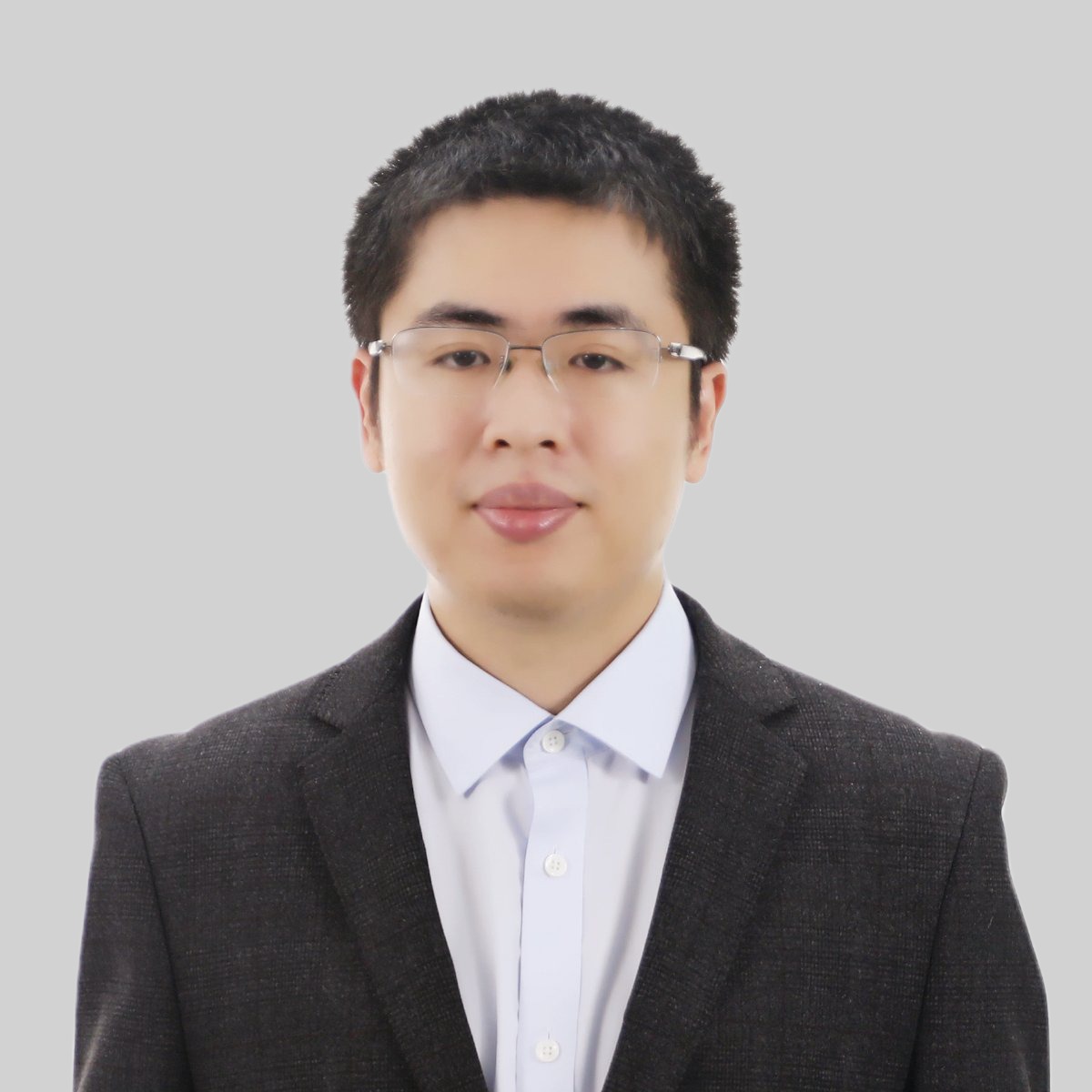
Ningyu Zhang
Zhejiang University
Title: AI Scientists: Knowledge, Memory, and Agent Collaboration
Abstract: AI Scientists aim to transform artificial intelligence from knowledge-driven assistants into autonomous discovery systems. This talk presents a vision and recent progress toward AI Scientists through three fundamental capabilities: knowledge, memory, and collaboration. We will discuss how knowledge-enhanced models enable scientific reasoning, how long-horizon memory supports continuous learning and experience evolution, and how multi-agent collaboration facilitates complex scientific exploration. Together, these advances pave the way toward autonomous AI systems that can discover, reason, and innovate alongside human scientists.
Bio: Zhang Ningyu, Ph.D., associate professor at Zhejiang University, Top 2% scientists by Stanford University. His research focuses on natural language processing, large language models, knowledge graphs, and knowledge editing. He has published papers in top academic journals/conferences such as Natural Machine Intelligence, NeurIPS, ICLR, ICML, ACL, ENNLP. He has developed OceanGPT, DeepKE, EasyEdit and LightMem. He serves as an Associate Editor for TMLR, Neural Networks, ACM Transactions on Asian and Low-Resource Language Information Processing, and Information Processing & Management. He is also an Area Chair for ACL, EMNLP, NeurIPS, ICLR, ICML and KDD.
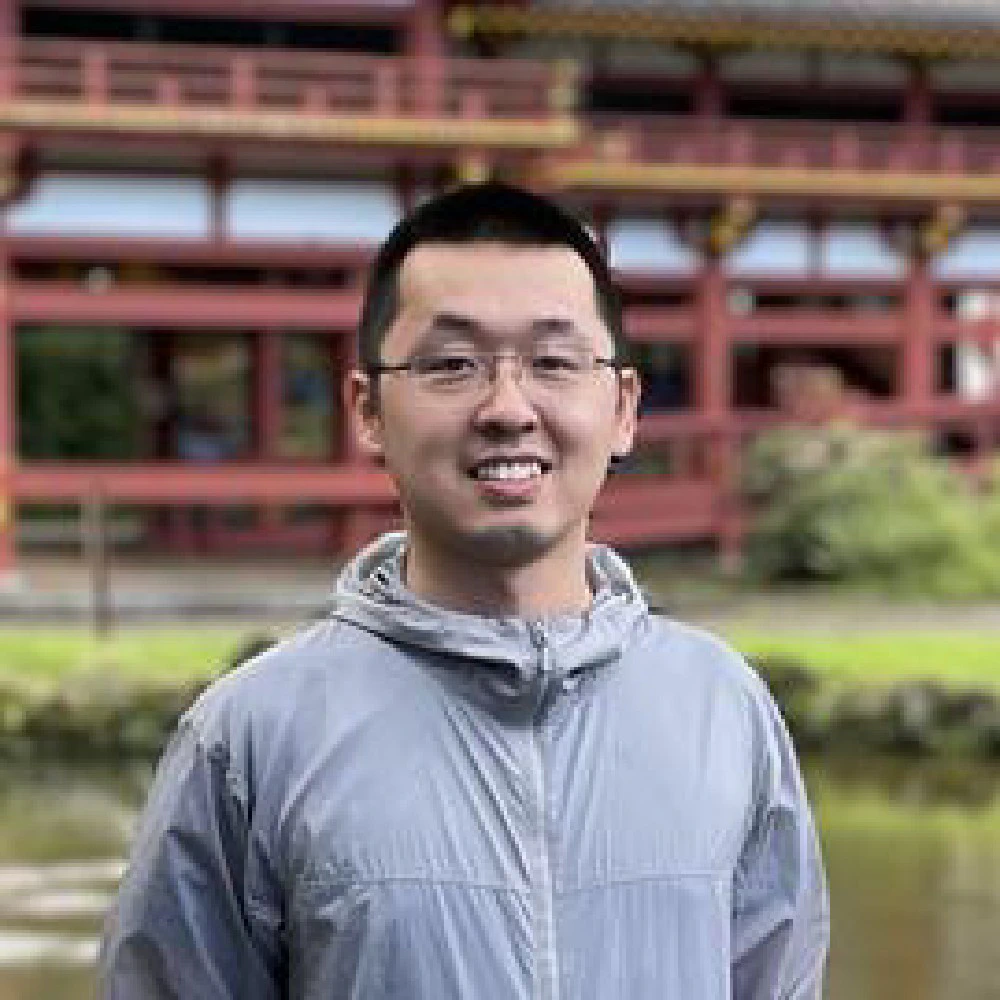
Junyuan Hong
National University of Singapore
Title: AI Agents on Social Media
Abstract: AI is born from the digital world we made — and that world is full of junk. This talk asks what happens when large language models, and the agents built on them, live on social media. It begins with the LLM Brain Rot Hypothesis: continual exposure to junk web text induces lasting cognitive decline in LLMs. Testing it required defining "junk" from social effects rather than semantics, so junk and reverse-controlled corpora were built from real Twitter/X data along two orthogonal axes — engagement degree (M1: short and popular) and semantic quality (M2: sensational) — with matched token scale and identical training operations. Continual pre-training of four LLMs on junk corpora causes non-trivial declines in reasoning, long-context understanding, and safety, and inflates dark traits such as psychopathy and narcissism, with a clear dose-response as the junk ratio rises. Error forensics identify thought-skipping as the primary lesion, and the damage proves sticky: instruction tuning and clean continual pre-training improve the degraded models but never restore baseline capability, suggesting persistent representational drift rather than format mismatch. Popularity — a non-semantic signal — predicts the effect better than length, so the problem runs beyond "garbage in, garbage out". The talk then looks forward: what emerges when AI agents are given their own accounts and left to evolve on Twitter, what a social platform populated mostly by AI would mean, and why deployed and evolving models need routine cognitive health checks.
Bio: Junyuan "Jason" Hong is an Assistant Professor in the Department of Electrical and Computer Engineering at the National University of Singapore, where he leads the CoSTA Lab — Cognitive Science and Trustworthy AI — exploring the frontier where human minds meet machine intelligence. His research is on responsible AI: the trustworthiness, privacy, and safety of large language models and the agents built on them, together with their application in health. Before joining NUS he was a research fellow at Massachusetts General Hospital and Harvard Medical School, and a postdoctoral fellow at the Institute for Foundations of Machine Learning (IFML) at UT Austin with Dr. Zhangyang "Atlas" Wang. He received his Ph.D. in Computer Science and Engineering from Michigan State University, advised by Dr. Jiayu Zhou. He was named an MLSys Rising Star in 2024, received a Best Paper Nomination at VLDB 2024 and third place in the U.S. PETs Prize Challenge, and served as a Top Area Chair at NeurIPS 2025. His recent work on "LLMs Can Get Brain Rot" has been covered by Nature News, WIRED, Forbes, and Fortune.